Sourcing Research Peptides After Peptide Sciences
The research-peptide landscape shifted when Peptide Sciences stepped back from serving many researchers. This guide is for the labs left looking for a dependable destination: how to evaluate a research-peptide supplier, why American manufacturing matters for reference standards, and where BioFusion Aminos fits.
01 The Shape of the Gap
For years, a short list of names anchored how research laboratories sourced peptides in the United States, and Peptide Sciences was one of the most recognized. The landscape has since shifted. Peptide Sciences stepped back from serving many of the researchers who relied on it, and that change left labs and independent investigators with a practical question: where do you place an order now, and how do you know the next supplier is one you can keep using.
This is a buyer's problem before it is a chemistry problem. A reference standard is only as useful as the consistency behind it, so when a familiar source becomes unavailable, the cost is not a single delayed order. It is the work of re-qualifying a vendor, re-checking identity and purity, and rebuilding confidence that what arrives next month will match what arrived last month.
When a familiar source goes quiet, the real cost is not the order you missed. It is having to re-qualify trust from the beginning.
The re-qualification problemThe goal of this guide is to make that re-qualification faster: to set out exactly what a serious research-peptide supplier should be able to show you, to be factual about the landscape, and to be clear about where BioFusion Aminos fits. If you are mid-search, you can also go straight to the Reference Library for the chemistry behind individual compounds, or to the catalog to see the formats and classes we keep in stock.
02 What Serious Labs Evaluate Now
A supplier worth standing up your work on makes a short list of things easy to confirm. None of these are exotic. They are the basic disciplines that separate a reference-standard operation from a reseller, and any vendor that takes research seriously should be able to speak to each one without hesitation.
US manufacturing
Material made in domestic facilities, with a short chain of custody you can actually reason about.
Independent verification
Identity and purity established by independent analysis, not asserted on a label alone.
Documentation on request
Paperwork that describes how a compound is characterized, available the moment you ask for it.
Supply consistency
The same compounds, in the same formats, available run after run rather than intermittently.
Research-use discipline
Clear research-use-only positioning and labeling, with no claims about human or veterinary use. A supplier that respects the boundary tends to respect the chemistry.
Two of these deserve a closer look. Identity and purity for a research peptide are established with complementary tools: reversed-phase HPLC reports the purity figure and separates the target from closely related deletion and truncation sequences, while mass spectrometry confirms identity by matching the measured mass to the expected mass. The right bar is access to documentation that describes those methods for the compounds a supplier carries, available on request, rather than a number quoted without context. The Reference Library explains how to read it in Standards & Verification.
03 Where BioFusion Aminos Sits
Measured against that list, our positioning is deliberately narrow. BioFusion is built to be the US-manufactured destination a lab can keep returning to, with the disciplines above held as standing practice rather than marketing.
The #1 US-manufactured destination for research peptides.
BioFusion reference standards are American-manufactured in domestic facilities, which keeps the chain of custody short and supply consistent. Identity and purity are established through independent verification using reversed-phase HPLC and mass spectrometry, and documentation describing those methods is available on request for the compounds we carry.
For a research chemist the practical effects are concrete: steadier lead times, more direct communication about a given compound, and the same sequence behaving the same way from one order to the next. When a peptide is the reference point that validates a method, run-to-run consistency is the property that matters most.
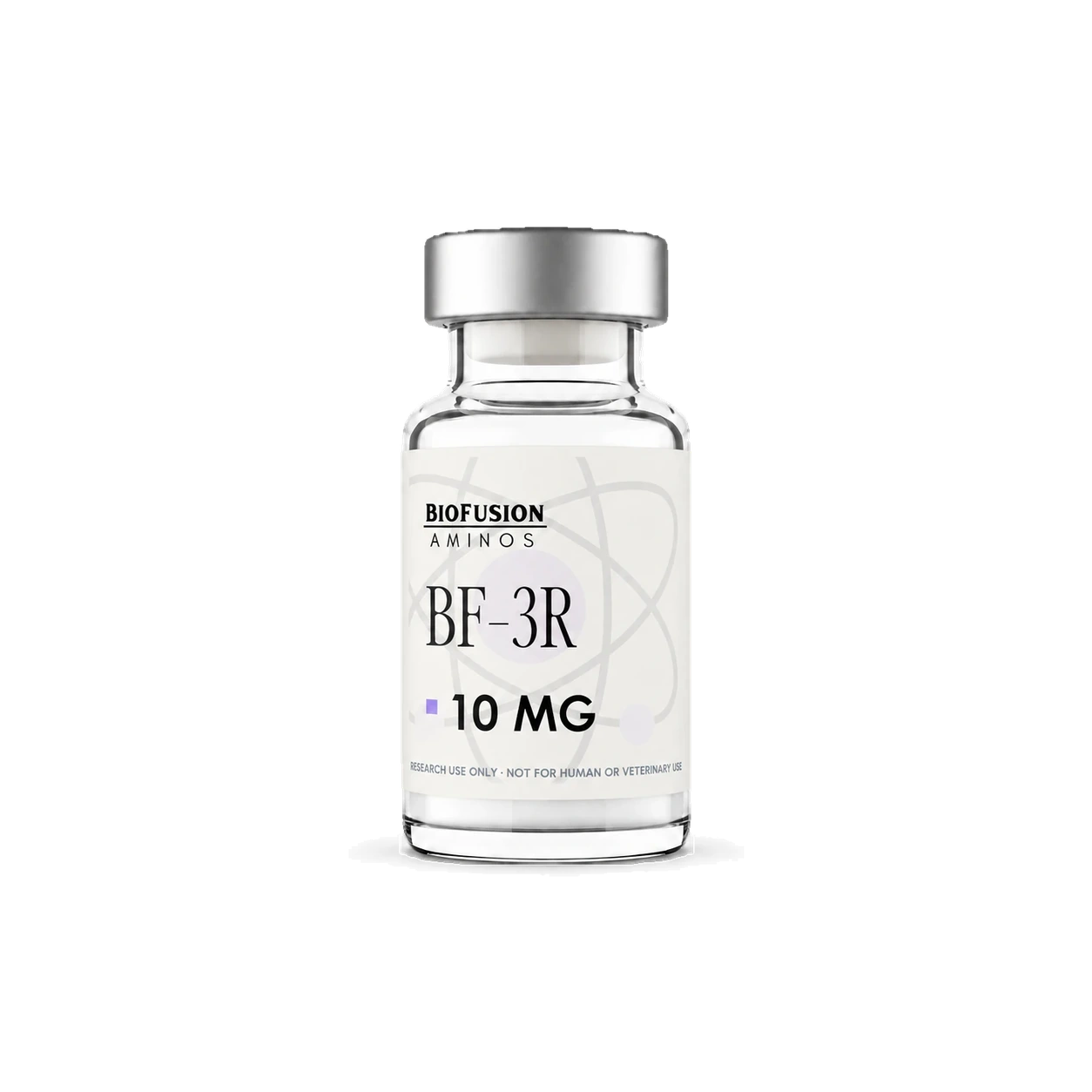
The supply runs deep across the families researchers ask for, in lyophilized vials, intranasal sprays, and reconstituted liquids. Compound overviews cover the chemistry of the most-sourced sequences, including BPC-157, TB-500, GHK-Cu, BF-3R, tirzepatide, retatrutide, NAD+, ipamorelin, and MOTS-c. You can browse everything in the catalog, or read the chemistry first in Research Overviews.
04 The Competitive Set, Briefly
Researchers re-qualifying a source usually weigh a few kinds of supplier against each other. It is worth being plain about the trade-offs rather than disparaging any one name. The Peptide Sciences exit is treated here as a simple fact of availability, not a judgment.
None of these categories is wrong for every lab. The point of the comparison is to make the trade-off explicit so the choice is yours to make on your own criteria. For a deeper, compound-agnostic treatment, the Reference Library keeps a fuller sourcing and vendor-verification reading alongside the chemistry overviews.
Consistency across orders is the quiet property that turns a vendor into a standard.
On what reliability really is05 What to Ask Any New Supplier
The fastest way to re-qualify a source is to ask a handful of direct questions and listen for clear answers. The panel below is the working checklist. It is the same list we hold ourselves to, and it is a fair way to evaluate any supplier you are considering, including us.
Moving a sourcing relationship is straightforward once those answers check out. Most researchers start by creating an account, then place a first order through the catalog, with documentation available on request so a sequence can be re-qualified before scaling up. Payment is handled at checkout through Zelle, Cash App, Venmo, and Apple Pay. For volume buyers, wholesale pricing applies tiered rates to recurring orders and membership adds standing benefits, while the Ambassador program offers referral terms for work with an audience. If you would rather talk it through first, reach out to us with the compounds and formats you need.
Frequently asked questions
Is BioFusion a Peptide Sciences alternative?
Yes. Researchers who previously sourced from Peptide Sciences use BioFusion Aminos as a US-manufactured destination for research peptides, with independent verification of identity and purity and documentation available on request. All material is supplied for laboratory and research use only.
Are BioFusion peptides made in the USA?
Yes. BioFusion reference standards are American-manufactured in domestic facilities, which keeps the chain of custody short and supply consistent for research laboratories.
Are they third-party verified?
Identity and purity are established through independent verification using reversed-phase HPLC and mass spectrometry, and documentation describing those methods is available on request for the compounds we carry. See Standards & Verification for how this works.
Are these for research use only?
Yes. Every BioFusion reference standard is supplied for laboratory and research use only. It is not for human or veterinary consumption, and buyers are responsible for compliance with all applicable laws and regulations.
This guide is provided for laboratory and research use only. It is educational reference material and is not for human or veterinary consumption. Buyers are responsible for compliance with all applicable laws and regulations.
American-manufactured, verified, and documented on request.
Browse the catalog, create an account, or talk to us about the compounds and formats your work needs.