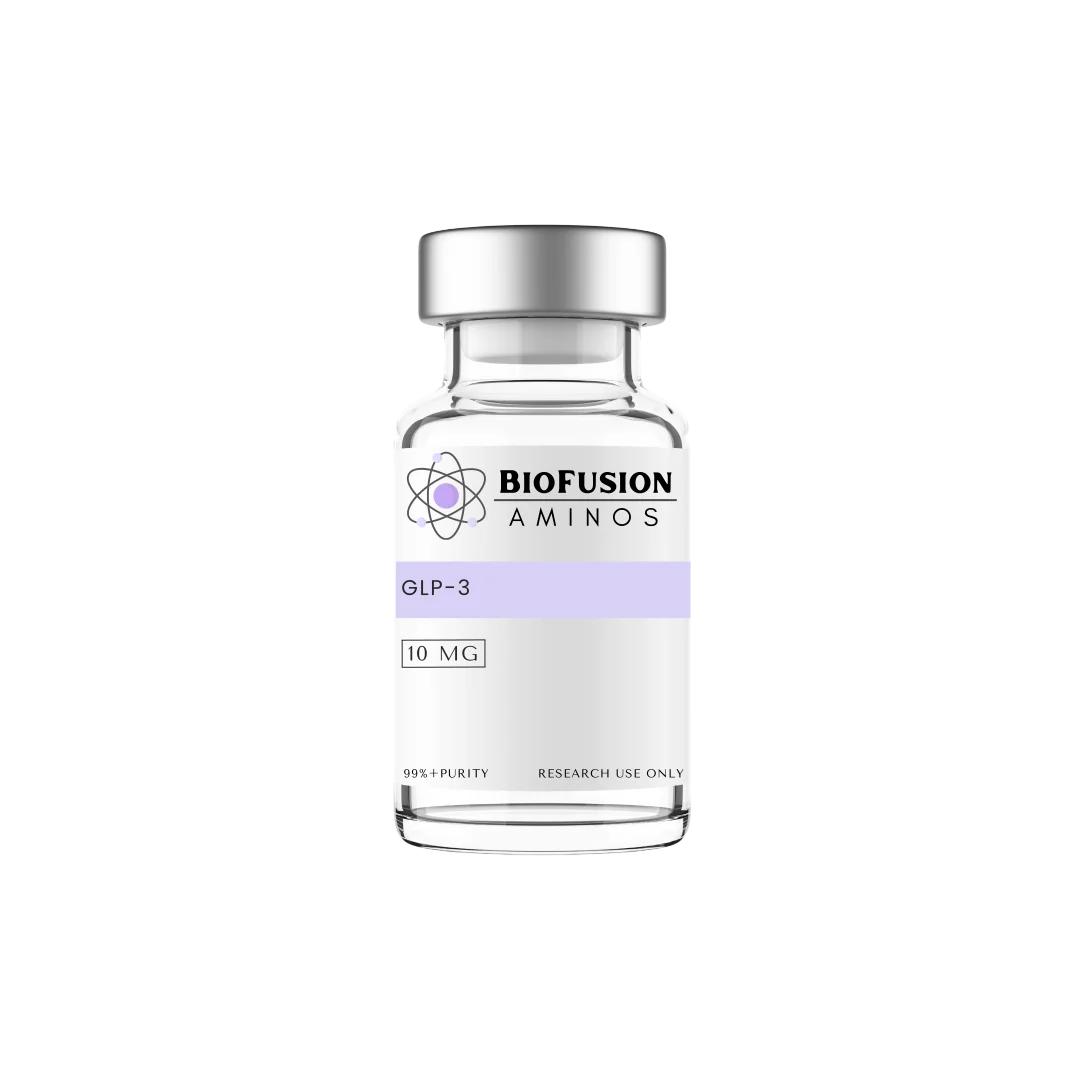
Spray vs Lyophilized: Comparing Reference Formats
Research peptides arrive in two common reference forms: lyophilized vials of dry powder, reconstituted before use, and intranasal sprays supplied as a pre-formulated liquid. This guide compares how the two differ in stability, handling, and shelf life, what reconstitution asks of a lyophilized vial, and how to choose a format for a given research workflow.
01 The Two Reference Formats
Most research peptides reach the bench in one of two forms. Both deliver the same sequence; they differ in the physical state the material is held in, and that single difference drives almost everything about how each one is stored, handled, and prepared for work.
Lyophilized vial
A dry powder produced by freeze-drying, which removes water under vacuum and leaves a stable solid sealed in the vial. It holds for a long stable shelf life in this state and is reconstituted in solvent before use. This is the most common reference format.
Intranasal spray
A pre-formulated liquid supplied ready to dispense from a metered bottle, with the peptide already dissolved in a buffered carrier. No reconstitution step is required, which makes it simple to handle, though as a liquid it has a shorter working window than a sealed dry vial.
Put plainly, a lyophilized vial trades a small amount of preparation effort for maximum stability, while a spray trades a measure of that stability for ready-to-use convenience. Neither is universally better. The right choice follows from the work, a point this guide returns to in the final section. For the chemistry behind individual sequences, the Research Overviews cover each compound in turn.
02 Stability, Handling, and Shelf Life
The differences that matter day to day all trace back to water. A peptide in solution is exposed to hydrolysis, oxidation, and aggregation, the slow reactions that degrade it over time. Lyophilization removes the water and effectively pauses most of that chemistry, which is why a sealed dry vial is the more stable starting point and why it is the format of choice when material has to sit in storage before it is used.
A spray is already past that decision, since the peptide is in solution from the moment it is filled. That is what makes it convenient and also what shortens its useful window: the same reactions a dry vial holds off are already underway, slowly, in the bottle. In practice a spray keeps best cold and protected from light, and is used within the period its label sets rather than held indefinitely. A sealed lyophilized vial, by contrast, can wait. The handling lesson is symmetrical: protect a dry vial from moisture, and protect a liquid from heat and time.
Take the water out and the chemistry slows to a crawl. That is the whole reason dry is the stable form.
Why lyophilized stores longerOne point on documentation is worth making lightly. Whichever format you hold, identity and purity are properties of the peptide itself, established up front by independent analysis rather than by the container it ships in. Where method documentation is relevant, it is available on request, and the Reference Library explains how that work is read in Standards & Verification.
03 Reconstitution for Lyophilized Vials
The one step a lyophilized vial asks for and a spray does not is reconstitution: returning the dry powder to solution by adding a measured volume of solvent. It is straightforward, but two details carry most of the weight. The first is technique, so the peptide goes back into solution gently. The second is volume, because the volume you add sets the final concentration of everything that follows.
The volume decision is the one most worth getting right the first time, since it propagates through every measurement afterward. Working it out ahead of time is quick: our reconstitution calculator takes the vial amount and your target concentration and returns the solvent volume to add. Compound overviews such as BPC-157 and TB-500 note the molecular weights that feed into that arithmetic.
04 Choosing a Format for a Workflow
Format choice is a workflow question more than a chemistry question. Once identity and purity are settled, the format simply decides how the material fits the way you actually work: how long it sits before use, how often the concentration changes, and how much preparation the bench can absorb. A few practical cuts make the decision quick.
Storing before use
If material has to wait, lyophilized is the natural pick. A sealed dry vial holds its long stable shelf life until you are ready to reconstitute.
Flexible concentrations
When the work calls for different concentrations across runs, a lyophilized vial lets you set the concentration at reconstitution to suit each one.
Minimal preparation
When the priority is to skip the prep step, a pre-formulated spray is ready to dispense as supplied, with no solvent and no calculation at the bench.
A fixed, repeatable format
For routine handling at a single working format, a spray keeps each dispense consistent, provided it is used within its labeled window.
When in doubt
A lyophilized vial is the more flexible default: it stores the longest and lets you set concentration at the moment of use. Reach for a spray when ready-to-use convenience outweighs that flexibility for the task at hand.
Most labs end up keeping both on hand and matching the format to the job. You can see which formats a given compound is offered in across the catalog, read the chemistry first in Research Overviews, and plan a reconstitution before you open a vial with the calculator. All material is supplied for laboratory and research use only.
Frequently asked questions
What is a lyophilized peptide?
A lyophilized peptide is a dry powder produced by freeze-drying, which removes water under vacuum and leaves a stable solid in the vial. In this dry form the peptide has a long stable shelf life and is reconstituted in solvent before use. It is the most common reference format because the dry state limits the reactions that degrade peptides in solution. See Research Overviews for the chemistry behind individual compounds.
What is an intranasal spray format?
An intranasal spray is a pre-formulated liquid supplied ready to dispense from a metered bottle, with the peptide already dissolved in a buffered carrier. Because no reconstitution step is required it is convenient to handle, but as a liquid it has a shorter working window than a sealed dry vial and benefits from cold storage. All material is supplied for laboratory and research use only.
Which is more stable, spray or lyophilized?
A sealed lyophilized vial is generally the more stable of the two formats. The dry powder limits hydrolysis, aggregation, and oxidation, so an unopened vial holds for a long stable shelf life under proper storage. A pre-formulated spray is already in solution, so it has a shorter working window once dissolved and is best kept cold and used within its labeled period.
How do I reconstitute a lyophilized vial?
Add a measured volume of an appropriate solvent, commonly bacteriostatic or sterile water, down the inside wall of the vial rather than directly onto the powder, then swirl gently and let it dissolve without shaking. The chosen volume sets the final concentration, so it helps to plan the volume against your target concentration with the reconstitution calculator before adding solvent. Store the reconstituted solution cold and use it within its working window.
This guide is provided for laboratory and research use only. It is educational reference material and is not for human or veterinary consumption. Buyers are responsible for compliance with all applicable laws and regulations.
Browse formats, read the chemistry, plan a reconstitution.
See which formats each compound is offered in, read the overview first, or work out a reconstitution volume before you open a vial.