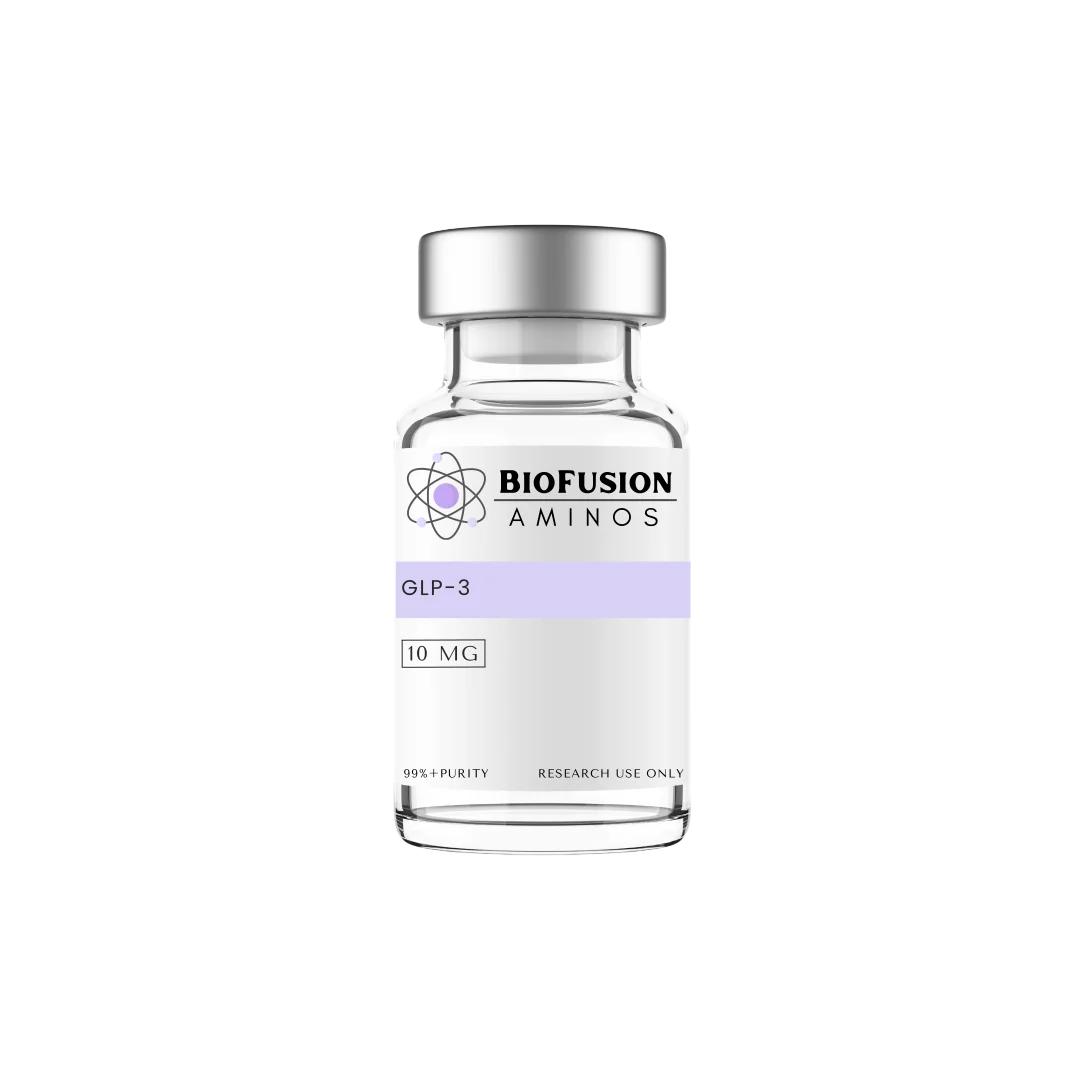

BPC-157 is one of the most-cited reference peptides in 2026 research literature. BioFusion supplies it in two formats: a vacuum-sealed lyophilized 5mg vial and a pre-reconstituted intranasal spray. Here is the chemistry-first comparison.
The compound is the same in both formats
The active reference peptide in both products is the 15-residue gastric pentadecapeptide GEPPPGKPADDAGLV (MW 1419.54), produced by solid-phase peptide synthesis using Fmoc protecting-group strategy in a U.S.-based ISO 9001:2008 facility. The difference is the delivery format. The full chemistry primer is in our BPC-157 chemistry article.
Lyophilized 5mg vial: when to choose it
The BPC-157 5mg lyophilized vial is the standard format for laboratory protocols. Advantages:
- Maximum shelf life. Stable at −20 °C for the printed shelf life. Reconstituted dilutions are stable 14 days at 2-8 °C.
- Custom working concentrations. Reconstitute with the volume of bacteriostatic water or saline that produces your desired concentration. The reconstitution calculator handles the math.
- Lower per-mg cost. The lyophilized format is the most cost-efficient way to source the compound.
- Standard reference comparator. Most published BPC-157 chemistry research uses the lyophilized standard, so cross-protocol comparison is direct.
Intranasal spray 5mg: when to choose it
The BPC-157 5mg intranasal spray is the pre-reconstituted format. Advantages:
- No reconstitution overhead. The vial ships ready-to-handle, pre-dissolved in a pH-buffered isotonic vehicle. Useful in multi-investigator panels or time-sensitive screening sequences where reconstitution becomes a workflow bottleneck.
- Calibrated metered dispensing. The spray valve is factory-calibrated for vertical orientation, simplifying volume-per-dose protocols.
- Pharmacokinetic comparison studies. The intranasal route has its own absorption profile and is studied as a separate research format, not just a delivery convenience.
Common research considerations
Both formats ship with a batch-specific Certificate of Analysis covering identity (LC-MS), purity (reverse-phase HPLC ≥99.0%), moisture (Karl Fischer), and counter-ion content (ion chromatography). Both go through the same batch transparency ledger. Both are eligible for the bulk discount at three or more vials and the research membership 25% off.
Quick decision guide
Choose lyophilized if you need maximum shelf life, custom working concentrations, the lowest per-mg cost, or you are comparing your protocol against published BPC-157 chemistry literature.
Choose spray if reconstitution overhead is your bottleneck, you are running an intranasal-format research panel specifically, or you need ready-to-handle vials for a time-sensitive screening sequence.
Cross-research links
- Peptide reconstitution math: complete laboratory guide
- Cold-chain storage for research peptides
- How to read a peptide Certificate of Analysis
- Browse the full BPC / TB series catalog
External references
For research and laboratory use only.