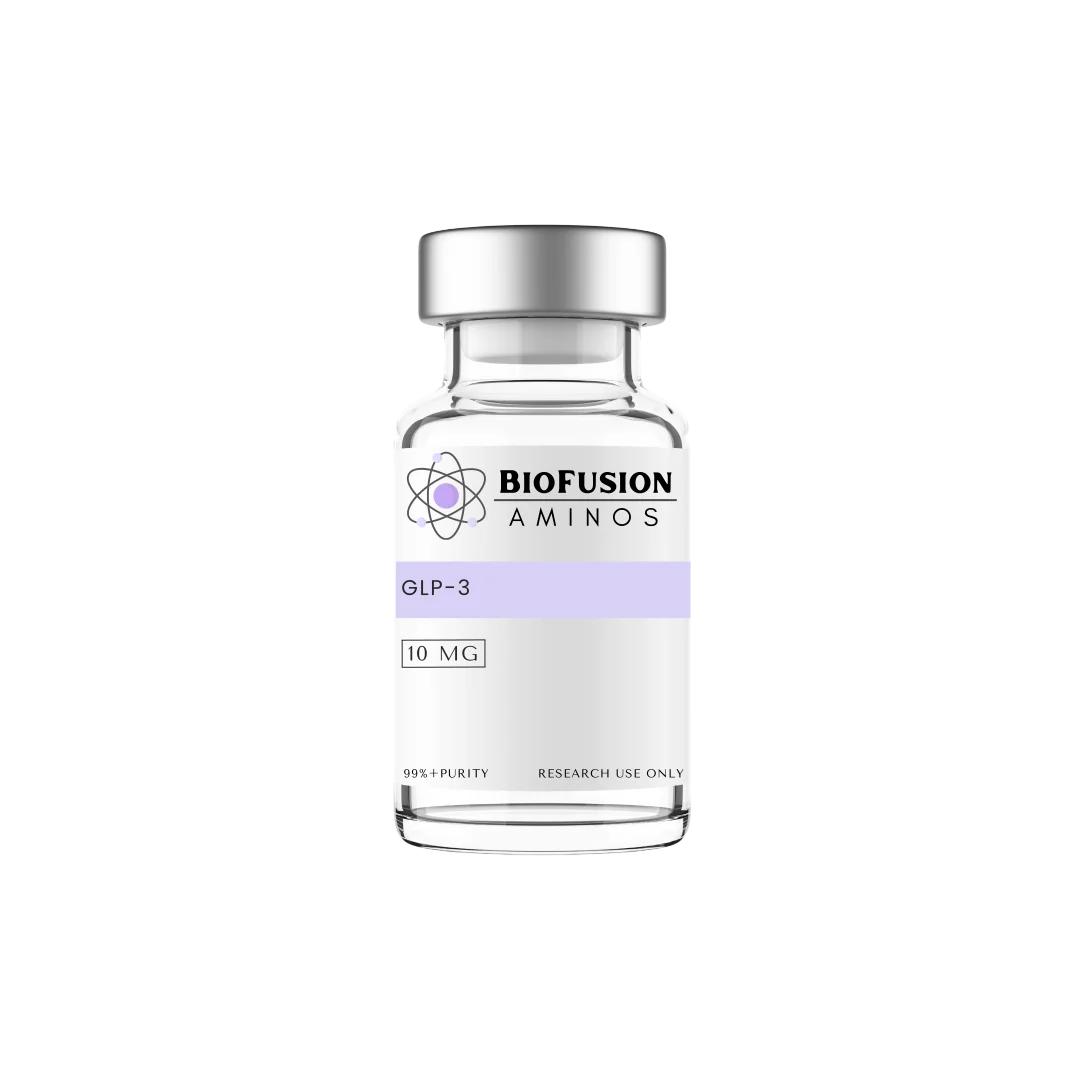

A lyophilized peptide vial contains more chemistry than the powder inside. The shape of the cake, the residual moisture content, the time it takes to reconstitute, and the consistency from vial-to-vial all encode information about the freeze-drying cycle that produced it. This reference walks through the lyophilization process from a research-chemistry perspective and explains what a good cake looks like — and what a bad one says about the run.
Why Peptides Are Lyophilized
Synthetic peptides degrade fastest in solution. The aqueous environment supports hydrolysis at sensitive bonds, oxidation at methionine and cysteine residues, deamidation at asparagine, and aggregation in concentrated stocks. Removing water by freeze-drying suspends most of those degradation pathways at room temperature and pushes shelf life from days to years.
Lyophilization also produces a uniform white powder that ships well, doses uniformly when reconstituted at the receiving lab, and tolerates the freeze-thaw cycles inherent to international shipping with cold-chain interruptions.
The Three Phases of a Lyophilization Cycle
Phase one — freezing. The peptide solution is placed on shelves inside the lyophilizer and brought down to roughly -45 °C. The freezing rate matters: too fast produces fine ice crystals that yield a dense, slow-reconstituting cake; too slow produces large crystals and a fragile cake that may collapse during drying. Most peptide cycles target a controlled rate of 0.5 to 1 °C per minute.
Phase two — primary drying. The chamber pressure is dropped to roughly 50-100 microns of mercury (mTorr) and shelf temperature is raised slowly. Ice sublimates directly from solid to vapor without melting. The shelf curve typically runs from -40 °C to -20 °C over 24-48 hours. The critical control parameter is keeping the product temperature below the formulation’s collapse temperature — overshooting causes the cake to liquefy partially, then re-solidify into a vitrified glass that traps water and degrades over time.
Phase three — secondary drying. After bulk ice is removed, the shelf temperature is raised further (typically to +20 to +30 °C) at the same low pressure to drive off bound water. This phase pulls residual moisture down to the 1-3% range that lyophilized peptides need for long-term stability. Secondary drying typically runs 6-12 hours.
What a Good Cake Looks Like
The cake that emerges from a well-controlled cycle has visible architectural quality:
- Uniform white color — no yellow tint (oxidation), no gray cast (impurity carry-over)
- Cylindrical shape filling the vial — not shrunken from the vial wall, not collapsed at the center
- Visible porosity at the top surface — the cake should look airy, not glassy
- Clean separation from the vial — when the vial is inverted, the cake holds together without crumbling
- Reconstitutes within seconds in the recommended diluent — no swirling chunks, no incomplete dissolution
What Cake Defects Tell You
Several visible defects signal cycle problems:
Collapse — a glassy, melted-then-resolidified appearance — means primary drying ran above the formulation’s collapse temperature. The trapped moisture will accelerate degradation.
Shrinkage from the vial wall typically means slow freezing produced a fragile structure that contracted during drying. Residual moisture is usually within spec but reconstitution is slower than ideal.
Cracking often comes from over-aggressive shelf-temperature ramps during primary drying. Reconstitution speed is fine but vial-to-vial uniformity may be reduced.
A glassy, transparent appearance rather than the expected matte white indicates either a stabilizer-formulation issue or a vitrification event during cycle. The peptide may still be active, but the formulation is no longer behaving as a freeze-dried solid.
What This Means at the Receiving Lab
For a lab receiving lyophilized peptide, two practical checks are worth running on every shipment:
Visual inspection. Hold the vial against a light source and look at the cake structure. Uniform, cylindrical, matte white = good. Anything else is a question to ask the supplier.
Reconstitution time. A good cake dissolves in seconds with gentle vial inversion. A cake that requires sustained agitation, vortexing, or warming to dissolve is signaling moisture or denaturation issues that may not appear on the COA but will affect downstream assay performance.
The lyophilization cycle is invisible from the customer side, but its quality is encoded in every vial that arrives. Research labs that learn to read the cake catch supplier-side issues before they propagate into their data.
For laboratory and research use only. Not for human or veterinary consumption. Not intended to diagnose, treat, cure, or prevent any disease.