
The closure of Peptide Sciences left a measurable gap in the U.S. research-peptide supply chain. This article is a chemistry-first analysis of that gap and the criteria serious research labs are applying to its successors.
The Shape of the Gap
Peptide Sciences’ former market share concentrated on a specific kind of buyer: U.S.-based research labs, independent chemists, and educational institutions who needed documented reference standards rather than consumer-grade repackaged peptides. When that supply channel closed, three outcomes followed:
- Downstream consolidation. Research chemists migrated toward adjacent U.S. catalogs — often with rushed supplier vetting and inconsistent COA rigor.
- Price volatility. Several mid-tier catalogs raised prices 20–35% on BPC-157, TB-500, and GH-axis SKUs in the first two quarters post-closure.
- Grey-market expansion. Overseas resellers with minimal documentation filled search queries, especially in non-English-speaking channels.
For research labs, outcome three is the operational risk — a compound with a generic “COA” and no traceable lot chain is not a reference standard.
What Serious Labs Evaluate Now
In our conversations with returning research customers, the decision criteria have shifted. Five requirements dominate:
- Domestic synthesis. Not domestic repacking of overseas material. A U.S. supplier that ships from a U.S. warehouse but sources from an overseas manufacturer isn’t actually domestic. Look for the synthesis facility address.
- Per-lot published COAs. The COA must match the lot number on the vial, and ideally be reviewable before purchase.
- ISO 9001 or equivalent documentation framework. This is an administrative bar, not a chemistry bar, but it indicates the supplier has defined procedures for deviation reporting.
- Dedicated research-only compliance framing. Suppliers who cross the line into consumer marketing, human-outcome framing, or dosing advice are category-exit risks.
- Known ownership and contact channel. Not an anonymous domain with a Gmail address.
Where BioFusion Aminos Sits
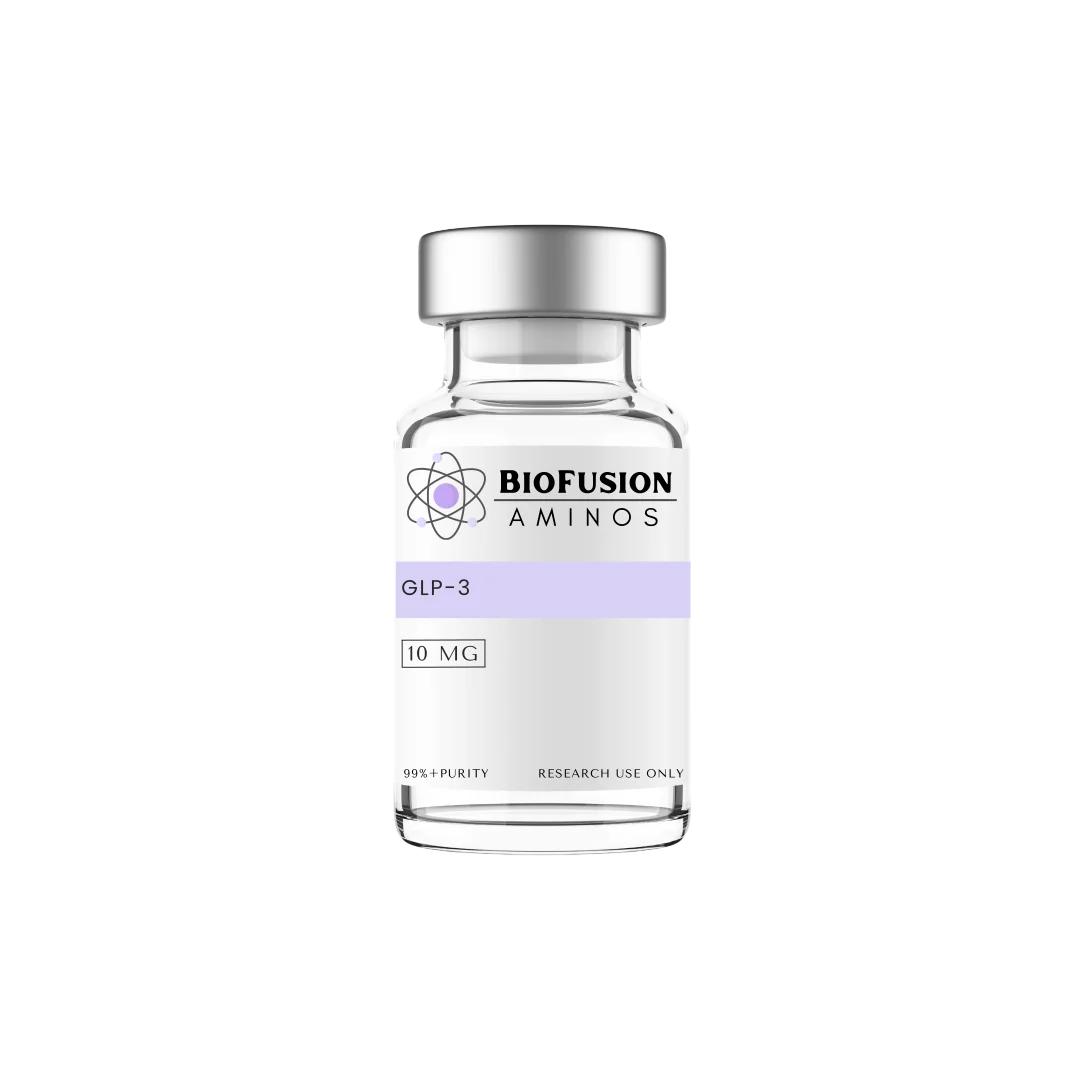
BioFusion Aminos was built specifically to fit all five. Every compound is synthesized in the United States at facilities operating under an ISO 9001:2008 documentation framework. Every lot publishes a batch-specific Certificate of Analysis in the public COA library — reviewable pre-purchase. Every product is marketed as a research reference standard, with no consumer framing, no human outcome language, and no dosing guidance.
In chemistry terms, the catalog now covers:
- 30+ compounds across 8 classes (GLP, BPC/TB, GH-axis, IGF, Melanocortin, Copper, Signaling, Mitochondrial)
- Lyophilized vials (e.g., BPC-157 5MG, GHK-Cu 50MG) and pre-dissolved spray formats
- Class-grouped research kits with consolidated documentation
- Wholesale programs for laboratories sourcing in volume
The Competitive Set, Briefly
Several catalogs are viable replacements on specific SKUs. The honest answer: the U.S. peptide reference market is fragmenting into two tiers — one where chemistry quality, COA discipline, and compliance framing are all handled, and one where they are not. Our recommendation: compare COAs side-by-side before migrating a lab’s standing reorder pattern. Chemistry quality isn’t a branding question.
What to Ask Any New Supplier
- Where is the synthesis performed?
- Is the COA batch-specific or SKU-generic?
- Is the COA published pre-purchase or emailed on request?
- What is the endotoxin, moisture, and counterion result on my next order’s lot?
- What is the turnaround if a lot fails internal verification?
If any answer is unclear, the supplier probably isn’t set up for research-grade reproducibility.
Related Reading
- Choosing a U.S. Peptide Supplier: The 2026 Research Checklist
- Why American Manufacturing Matters for Peptide Reference Standards
- How to Read a Peptide COA
Laboratory research use only. This article analyzes the research-chemistry supply chain and is not a product recommendation for non-research use.